BLOG
Musings (rants) on Leadership
It is very frustrating that, when societal or business (same same I know) issues arise, rather than solving them, we create industries to assess, evaluate, audit, and report on them. This has occurred - in my mere lifetime - in manufacturing, social and labor practices, environmental and chemical sustainability, and now in leadership. During my professional life, there have been many a prolific leadership coach, author, speaker who are icons based on this. Write about what leadership should be; profess to know what true leadership can unlock; coach myriad professionals on leadership principles and practices. Profess, profess, profess. But instead of fixing an issue, we create yet another industry of money makers on the back of the very issue it is claiming to be able to transform. Erg. What about true leaders? What about true leadership being identified, lauded, recognized and leveraged to train - not through theory, but through tried and true practice. I humbly call myself a leader. Not one without fault and failure, but a leader who has chosen to repeatedly stand in the shoes of others in order to develop the insight and depth of perception into what makes people tick. I have lived the shift in power from being the one who leads to being the one led.
Leading is being a person out loud - all of our glorious shining achievements, our elegance, our eloquence, our big badass selves. Leading is also being our wretched, anxious, fearful, possessive, jealous selves out loud - but having the skill to see this side and to put it secondary to being with all people, moving forward. Everyone we lead can see our warped and weak side - they choose, they decide, to also see it as secondary simply because we have shown it and have shown them how to not be engulfed by it, but to share the lightness of ourselves first. To LEAD with our light.
Instead of having leaders though, we have myriad leadership coaches who talk at impermiable walls of humans who refuse to, who fail to, show their humanity. The dimensions of people are so rich and layered and yet we choose to be spoken TO about how to become leaders vs experimenting and trying to reach into our richness and share what we find with those we are leading.
How many Corporate Execs do we need to read about who steal money, steal the lives of their employees, who extort, molest, cheat, short-change, and who let companies fail while they save their own ass for soley financial reasons? Robbing overtime, stealing vacations, unwavering on flex time, insisting employees conform to a 19th century version of a compliant, near-impoverished indentured servant, these Corporate “icons”, “magnates” have made their names on the exploitation of people. Of workers. People are ‘workers’. They are not mothers, fathers, friends, creatives, thinkers - all who provide intellectual and emotional challenge and affinity, but who represent a threat to the survival of the LEADER.
I believe one is not, and never will be, a leader unless one is also a follower. Have you ever had to report into someone who previously reported into you? Try it. It will fundamentally and foundationally change your view of leadership. Until and unless real people decide to flip the power structure, the power structure will never be changed. I think ture leadership requires humility - and humility is in short supply across the power brokering. The Simon Senek’s of the world can make a good living talking at leaders about what they should and could do. It is only when they are confronted what they WOULD do when the power structure tips the other way that they will know if they actually have the capacity and ability to be a true leader.
Connecting the Dots
I was listening to a podcast that was discussing personal awakening points in life: the moment(s) in life when we realize our super-power. Since being around Kanye, the ‘super power’ term has worn thin, but I took the point on board. We each have one, or several, special talents, special skills, that, if we realize them, and we nurture them, they distinguish who we are.

Sustainability is unsustainable

I am struck by the claims of “sustainability” from apparel and home furnishings brands that proliferate fashion media and marketing. A decade ago “sustainability” carried different meaning than it does today, but the term has been used loosely and without clear definition for long enough. Brands need to be called to task for using the term as a scheme to promote healthy environmental practices when, in fact, they either fail to adhere to healthy practices, or they fail to learn the veracity of their own claims in order to have an authentic message.
What does “sustainability” in the retail / product industry mean in this time of evidenced environmental degradation? What does “sustainability” mean when communities are suffering from unbreathable air, undrinkable water, toxified soil, and suffocating waste? What does “sustainability” mean when women demonstrably earn less than their male counterparts - irrespective of country - but dominate in the ‘making’ of product? What does sustainability mean? One dictionary definition is: “the quality of not being harmful to the environment or depleting natural resources, and thereby supporting long-term ecological balance”.
What exactly is sustainable about brands that knowingly and intentionally purchase goods from countries and suppliers who put toxins into the earth, the water, and into the lives of the people who make product? What exactly is sustainable about brands that source from regions where there is little regulatory protection over the earth, air, and water? What is sustainable about brands that neither take responsibility for output of and waste from the sourcing and making of the product they purchase, nor do they consider the product’s end of life and its impact (again) on water, soil, air, or people?
I’ve spent 30 years on the front line of ‘the making’ - in the fields, the factories, and the mills - I have breathed the air, drunk the water, and walked the land where apparel, accessories, and home furnishings are made. I have worked with the people who started and who run manufacturing facilities around the world, as well as those who do the actual making.
Over the past 20 years, an entire industry of “sustainability” and “corporate responsibility” has been generated: in-house brand teams and 3rd party service providers charged with ‘engaging’ various nonprofits, NGO’s, and reporting organizations to assess, evaluate, measure, and grade suppliers on THEIR ability to meet varied standards. Never has their been an end-to-end measure of a brand’s ability or failure to deliver on those same standards and requirements. Myriad assessing and reporting tools have been generated, fueling the perception that data exists, but, in fact, the reporting tools change, morph, disappear, and can actually operate in conflict with one another. So, as seasoned professionals we spend time debating the accuracy and efficacy of the various tools - and we fail to actually deliver transformational change where the work is done.
So here we are in 2019…
The apparel industry, in particular, is the #2 environmental polluting industry - second only to the oil industry. That is embarrassing - especially since I have invested my career in working for the betterment of it. Home furnishings companies decimate more virgin forests than global forest fires - second only to commercial farming. The data is available. The results of 20 years of “sustainability” are abhorrent. Brands do not allocate budget dollars to “results”, they expect that innovation associated with “sustainability'“ is paid for and managed by suppliers. However, the economics of this are upside down: Brand product margins are 60-85%; manufacturing margins hover around 3-12%. Brands must start to admit, and to account for, their impact and their flawed ‘sustainability’ economic models.
I’d like to shift the focus, alter the perspective, and evolve the dialogue. My point of view is not popular. My point of view demands that people, teams, companies, and brands actually DO something vs market something that leads the industry to massive, scaled transformation.
Refreshingly, or frustratingly, there is no one single solution. Yet there are myriad solutions to exploit, and many options to exercize in the short term and the long term. Let’s start with stating what “IS”: apparel and home furnishings brands have the resources and data to report on their current utilization, impact, and recovery. Before they sign up for a 3rd party assessments, just state what is:
How many units of product manufactured - let’s say per year
Of those produced, how many are sold - at full price or markdown - and go into the homes and lives of consumers
How many units are not sold - where do they go
How much of what / each raw material is sourced to make the product(s)
Of each raw material,, how much is virgin and how much is reused / recycled
How many gallons of water used in manufacturing each raw material and each finished product
How many ‘dirty’ gallons went through treatment - how many did not
How many clean gallons were returned to nature and/or public use
Define ALL waste material
Map disposal of all waste
Define bio-degradation of waste material
How much CO2 is generated in order to support the business
How much particulate is put into the air as a result of the business operation
Community impact - the manufacturing, the purchasing, and the waste-receiving communities: how are their lives and well being improved by the existence of the business
You get the point.
A dashboard that would say what “is” - in measurable units - is essential to know where one is starting from in order to the the course of where one is going. Not percentages of decrease or increase - the absolute values that are, relative to what are “acceptable” and decided health standards - for soil, water, air lungs, kidneys, etc. The data exist. For argument’s sake, and because I know people like to argue absolute values, let’s say that 50% of the data is true. If only 50% of findings are verifiable, they will be significant enough to raise an eyebrow and to demand true action. The indices that exist today measure incremental percentages of change +/-. They do not measure what ‘is’ and they most certainly do not inform people that whatever their current measures are, they are nowhere significant enough to transform the industry.
Starting with what ‘is’ enables us to know how far we have to go, informs what we have to do, and who we have to work with to impact results.
Organic Milk

Organic Milk is a metaphor for so much that is messed up in our society.
We buy and eat organic food. We doubled down when we had a kid; we wanted to give her every opportunity to experience healthy, local, nutritional food that tasted as Mother Nature intended it to taste - not like the generic colored version of what is offered in most grocery stores - or in all convenience foods outlets. We eat full fat dairy - butter, cheese, milk. As athletes and generally physical people we believe in the benefits of slow-burn calories, the appetite-satisfying nature of fat, and the flavor it brings to everything.
When people come to our house, they notice the flavor of things. When we get into a conversation about organics, full fat, etc. we listen to the apologetic argument that “organic costs more” and that’s why “they” don’t buy it. Sometimes it does, and often times it does not. The real issue seems to be the thought and effort one must commit to eating an organic diet. To us, it is worth it; exponentially worth it. It did not keep my daughter from developing allergies, but she does know what food tastes like - the real flavor of ingredient.
So, wherever I travel and wherever I eat, I select the organic options, if not for my own preference, then for the revenue I contribute to the organic food industry. As mainstream food companies acquire organic brands one may suspect they are ‘blending’ or even passing non-organic for organic. I am sure this occurs - I’ve been in global supply chain my entire career, so I have seen what happens in the land of raw materials- but generally, there are clear and verifiable standards and protocols that makers must practice, and verify, that make it challenging to fully dupe the system, or the customer.
But still, people like to debate with me which organic dairy farm, in particular, has been acquired by which mainstream dairy and why the acquisition negates that veracity of thier ‘organic-ness’. Rather than applauding the organic farmers for sustaining and achieving an ‘exit’ to a bigger company that may put money in their pocket to start another venture, we scrutinize their motives - and the net result. And, rather than support the organic food industry revenue generation overall, we quibble about the degree-of-organic-ness. How about we turn our energies toward the resolute non-organic food producers? Industrial dairies are sights of anguish, filled with distraught, abused animals. Industrial meat production is even worse.
We who #resist mainstream industrial food production need to align with our kin and focus on the true ills of food production and consumption. Again, a metaphor for so much going on these days. Align. One doesn’t have to agree in order to align (#TriumGroup); one needs to decide that the bigger picture and the larger principle is one that one can stand with and behind, as if it was one’s first choice. Then we can align our focus on the issues needing to be solved, like the healthy treatment of animals in our food supply chain.
On Being...Married
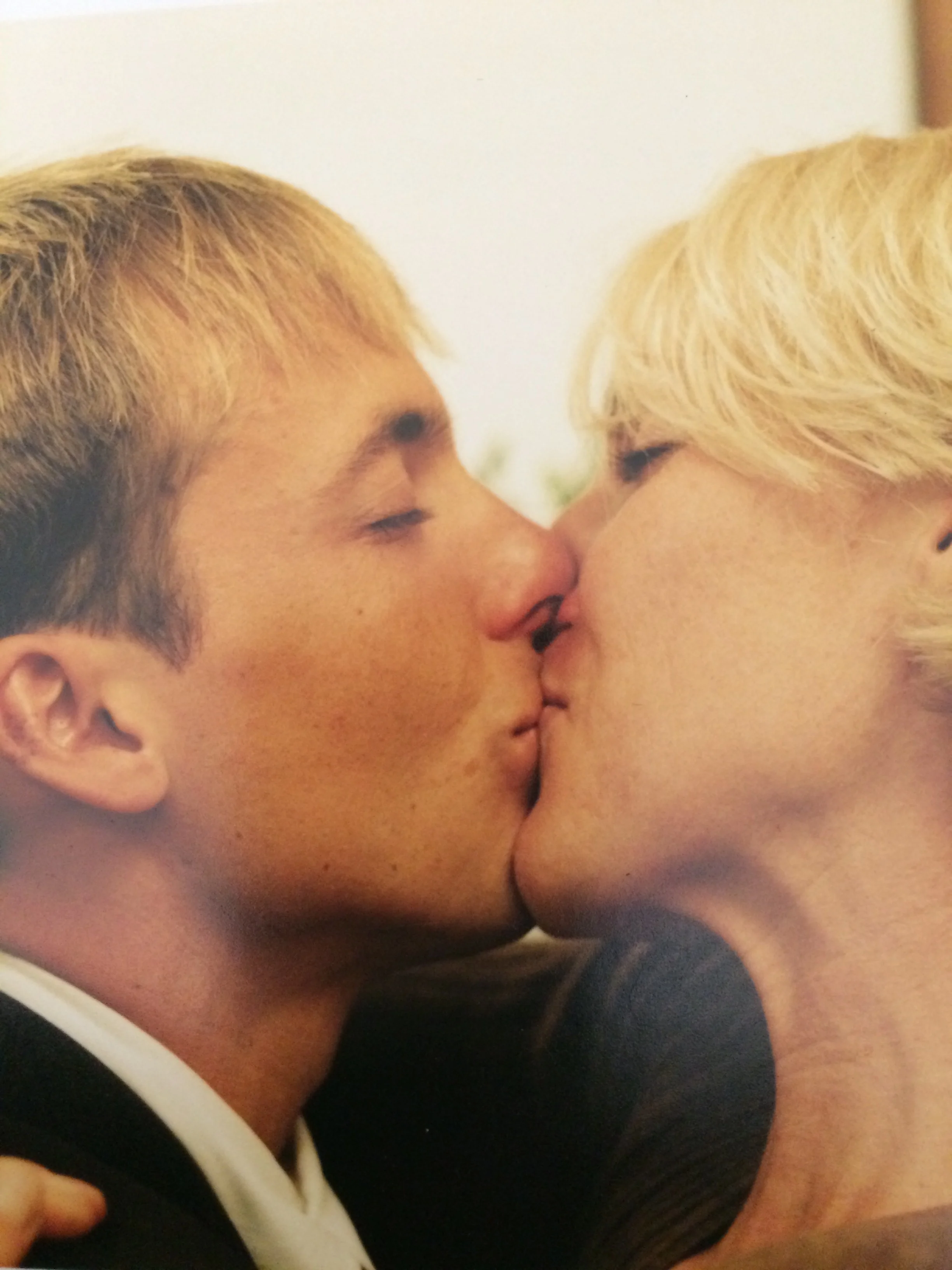
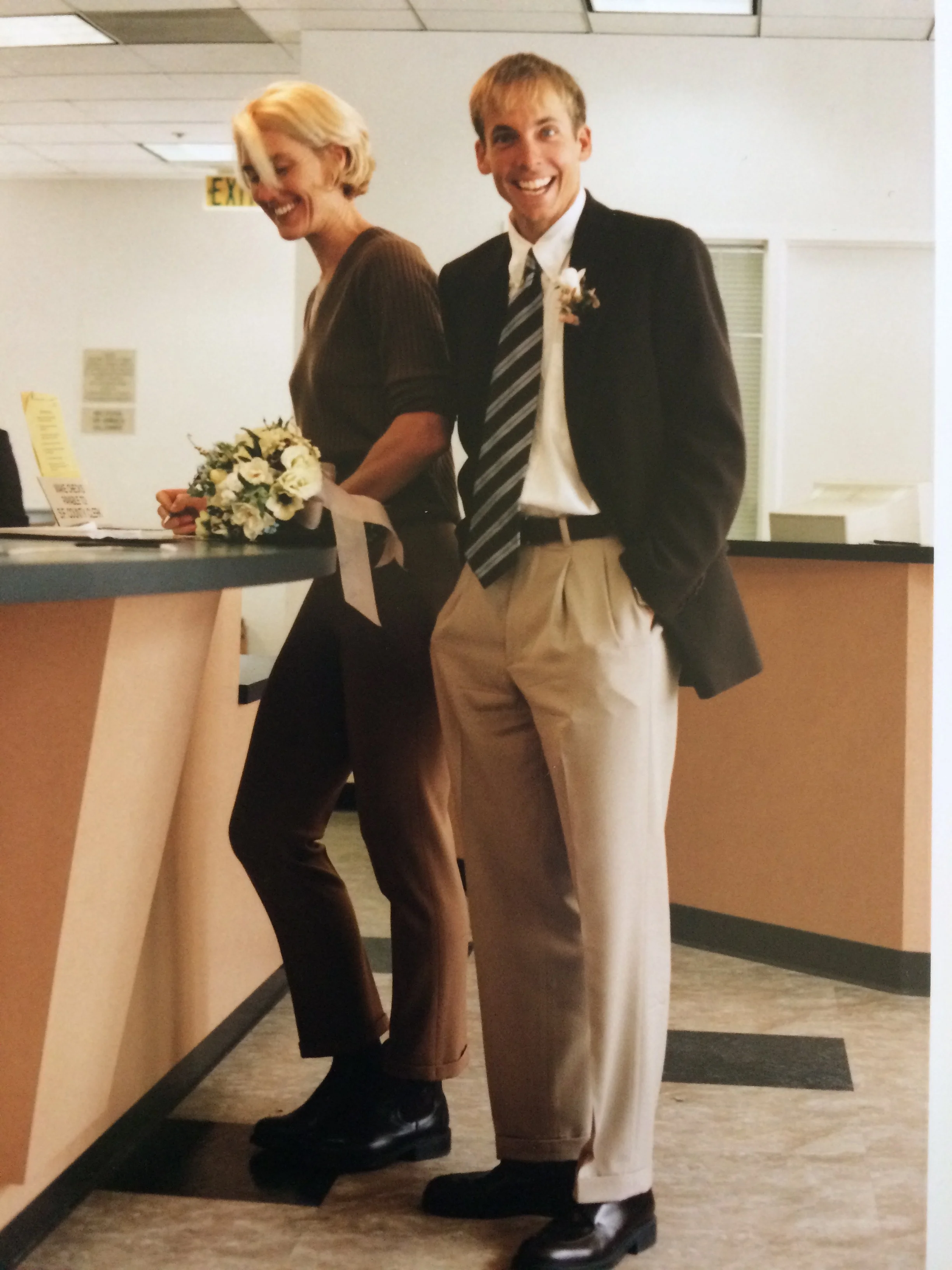
Funny how difficult this day is to remember - the specific date. October 7, 1998 is our wedding day, our anniversary. County Courthouse, San Francisco. Lunchtime. I remember that because after getting married I went back to work. Romantic, huh? In fact, everything about me has been "back to work", "at work", "going to work". I think I thought I was put on this earth to work. Everything about me was work. Through work I have met extraordinary people; traveled to seemingly unreachable places; enjoyed music, culture, and friendships that have lasted my adult life. And, through work, in work, I have hidden.
June 1993 I was introduced to "Keiser". He was going to teach me to in-line skate. I was a 'quad' skater; a beach dance skater. Having observed the new 'in line' skates on the Venice Beach boardwalk, I was curious and intrigued. Keiser was a Comedian, an in-line skate racer, and a Tech Rep for Rollerblade. He was also going to be my skate instructor. After a couple skate-path outings with him I was hooked - on in-line and on him. This was the time of beepers...I beeped him all day asking for, and confirming, our skate hook-ups during which we would go from Santa Monica to Manhattan Beach and back. We really did not speak much; I was crouched behind him, nose to booty, following in his stride. Keiser had a long, elegant extended stride. He also had great balance, tenacity, rhythm and endurance. But it was his ability to hang in silence that I began to enjoy and yearn for. Calm, quiet, present, resilient, ready. Our friendship grew into love, grew into partnership, grew into family.
Ironically, I was not working when I met him. For a short window of time I was not hiding...behind work at least. Keiser saw me.
Keiser and I have been together for 23 years. Today, October 7, marks 18 years married. Because we both come from families of serial 'marriers', our tenure alone is remarkable. But what I am most proud of, most appreciative of, is having found someone with whom I have been able to be me, and to be seen: to grow, to open up, to fail, to triumph, to laugh, to cry, to eat, to travel, to love. In turn, I have given my best to be all the same for him. We've 'gone outside our marriage', we've struggled through near separation, we've felt fear and anger like most do. But we have worked through all the crap, learned to 'get over ourselves', pressed through challenges and gained perspective to arrive at what is really important: how much love we have for one another and how deep it goes. I attribute this to our shared skater skills: balance, tenacity, rhythm and endurance.
Happy Anniversary Keiser. I'm honored and proud to be part of us.
Musings on Accomplishment

I am, admittedly, a podcast junkie. I think I have a library of 120 that I listen to. Depending on my mood, my whereabouts and my interests, I tune in to hear what other people are apt to put on the airwaves for the rest of us to absorb. Though I approach listening to podcasts with a sincere desire to learn and to be inspired, I sometimes can't help but feel thoroughly unaccomplished by the end. I have been a professional for over 30 years; I have been an athlete across a number of sports; I've fostered a loving marriage for over 22 years and I have a lovely teenage daughter who is thriving. What is my problem?
Something about ready access to an abundance of media compresses experiences; compresses lives. What may have taken someone 5 years to build; 10 years to realize is reported out in 27 minutes (or so). I know I am responsible for the way I feel so I am trying to put in perspective the life stories - lengthy, surely tumultuous, triumphant and chaotic - in relation to the podcast format.
I've not figured out the balance of inspiration and motivation, or reflection vs regret that I feel when absorbed in my podcast world. It does not stop me from listening at all; it does however, stop me from stopping.
Change, through the eyes of a "change junkie"
Many years ago a boss characterized me as a "change junkie". I think he meant it as a compliment even though he rarely doled out compliments - especially to any women. At the time I was working with a large corporation and daily life seemed to have devolved into sitting in meetings with different consultant groups talking about how we would inspire, manage, drive, and sustain change. Here's how simple my mind is: I thought, if we want to change, why don't we do something(s) different other than sit in rooms hour after hour talking aout how we are going to do things differently. I am a woman of action; of movement; of dynamic progress. I am not afraid of changing things up to generate different results. "Operating in a state of ambiguity" is how I prefer to characterize it.
Even I have limits. Today, I find I have hit a limit. Many people have to develop the mind set to take on change; I have to develop the mind set of what to do to a) slow the change and b) how to operate in greater stasis. Even though I feel like I need to take a break from the change, I am not sure I have the developed muscles to manage it. Maybe a little bit "living in the moment" but also maybe a little bit of "stop trying to alter everything". Maybe they are the same thing.
Musings for the day.
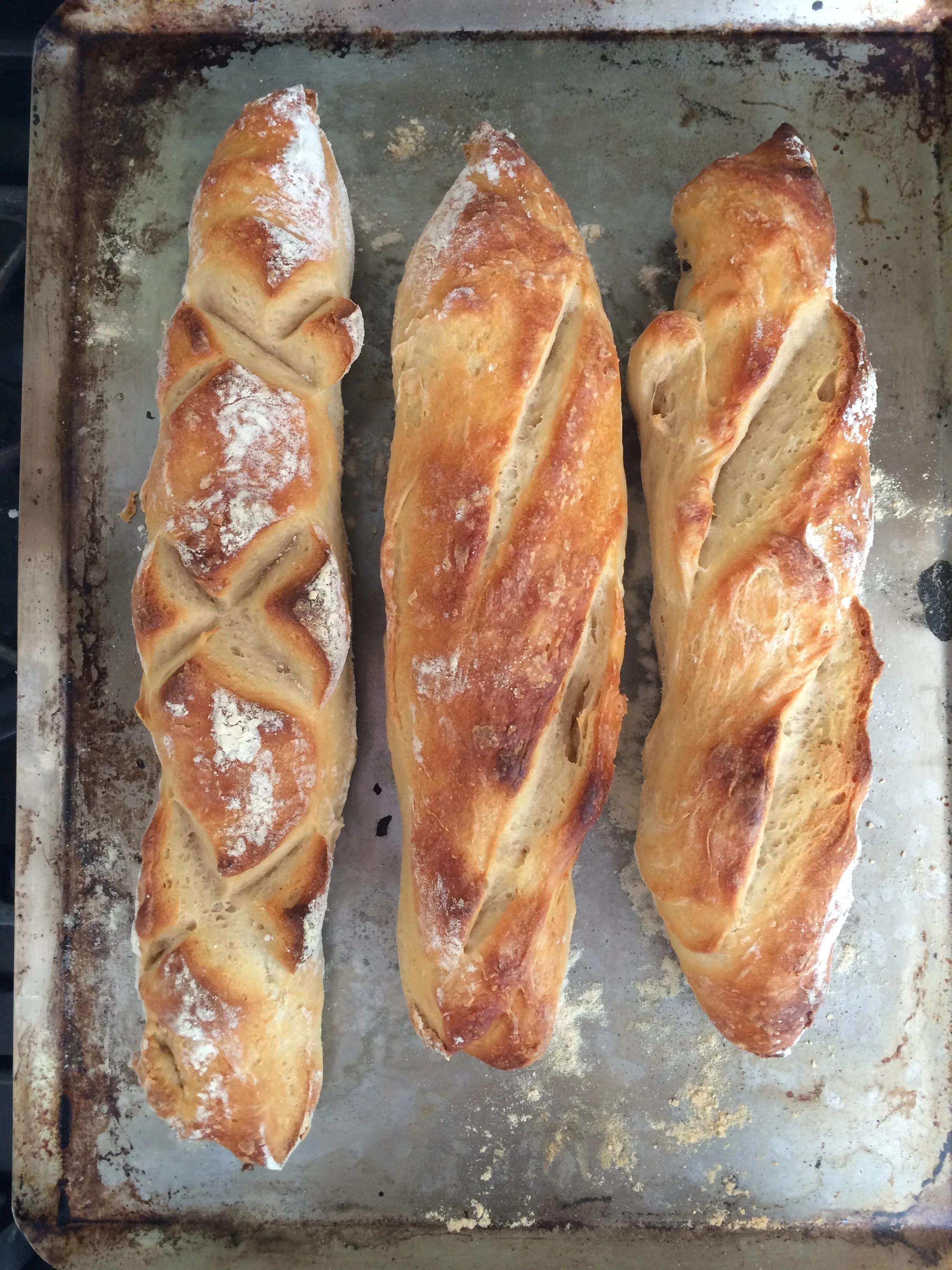
Bread baking
Baking bread: I am neither a cook, nor a food enthusiast. I do enjoy bread though. And, having lived in France for 7 years I became quite used to my baguette-a-day habit. Now back in the US I struggle to find an authentic french baguette. I can find 'a' baguette but it likely does not have the same (right) crusty exterior, airy light interior, perfect length (for carrying) and...the big clincher...cost the right amount ~$1-2 bucks. Bread is not a luxury; it is not fancy. It is simply elegant, yummy and a great form of basic sustenance. So, I have embarked on a bread-making effort that proves entertaining and frustrating at the same time. I've made several great baseball bats - hard as wood. I have made a few molten yeast-blobs - more like Irish Soda bread but without the unique flavor. I've made OK tasting loaves but nowhere near the crusty baguette splendor for which I am longing. I keep trying, convinced that the chemistry will strike and I will find the right recipe and the right touch.